
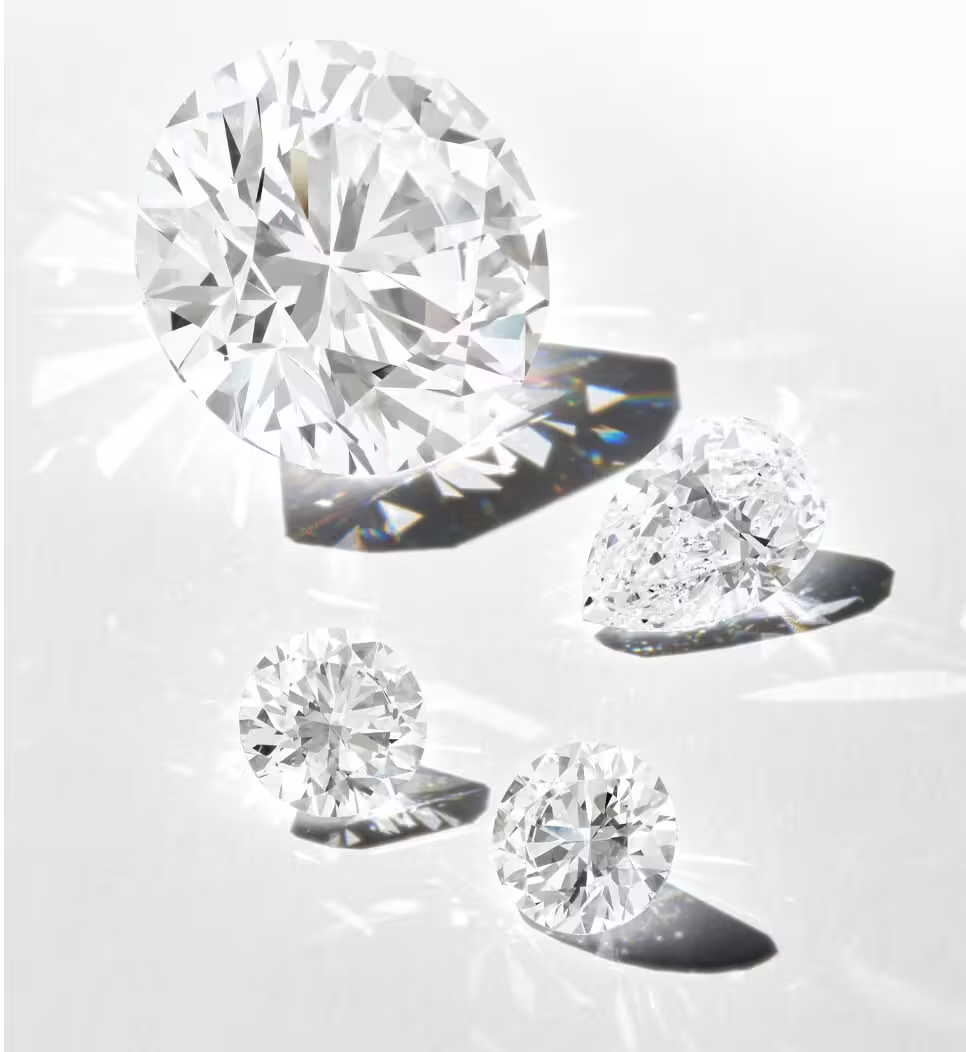
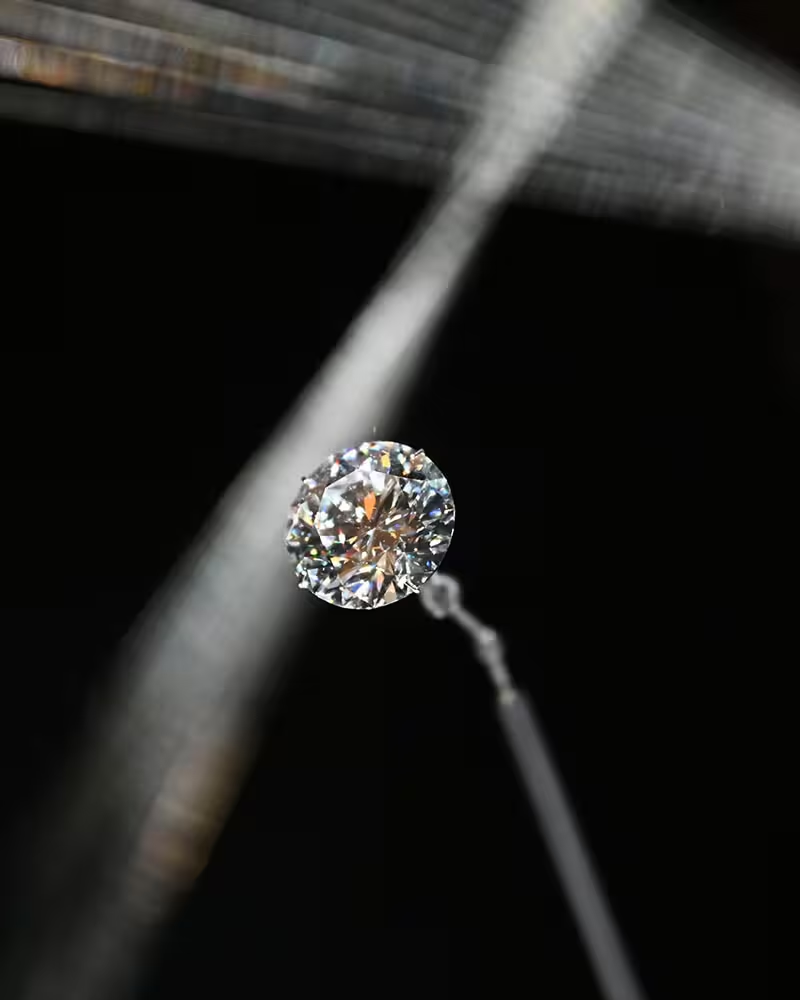
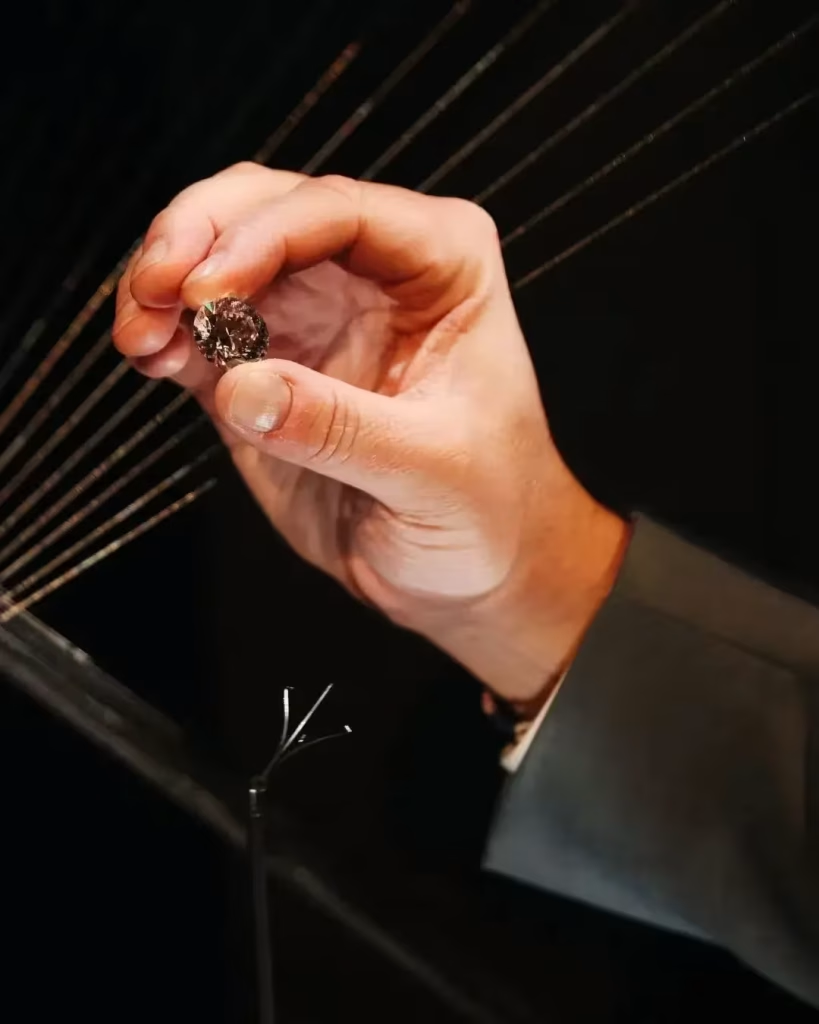
In the heart of London’s Maison Assouline, surrounded by dark oak bookshelves and the refined ambiance of literary luxury, De Beers unveiled not one but two treasures that encapsulate a century of diamond storytelling. The first: a breathtaking 28.88-carat round brilliant diamond of the highest caliber – D-color, internally flawless, and born from the legendary Jwaneng mine in Botswana’s Kalahari Desert. The second: a beautifully crafted tome titled A Diamond Is Forever: The Making of a Cultural Icon 1926-2026, published by Assouline, chronicling how a single phrase transformed diamonds from elite luxuries into enduring symbols of love, commitment, and cultural significance.
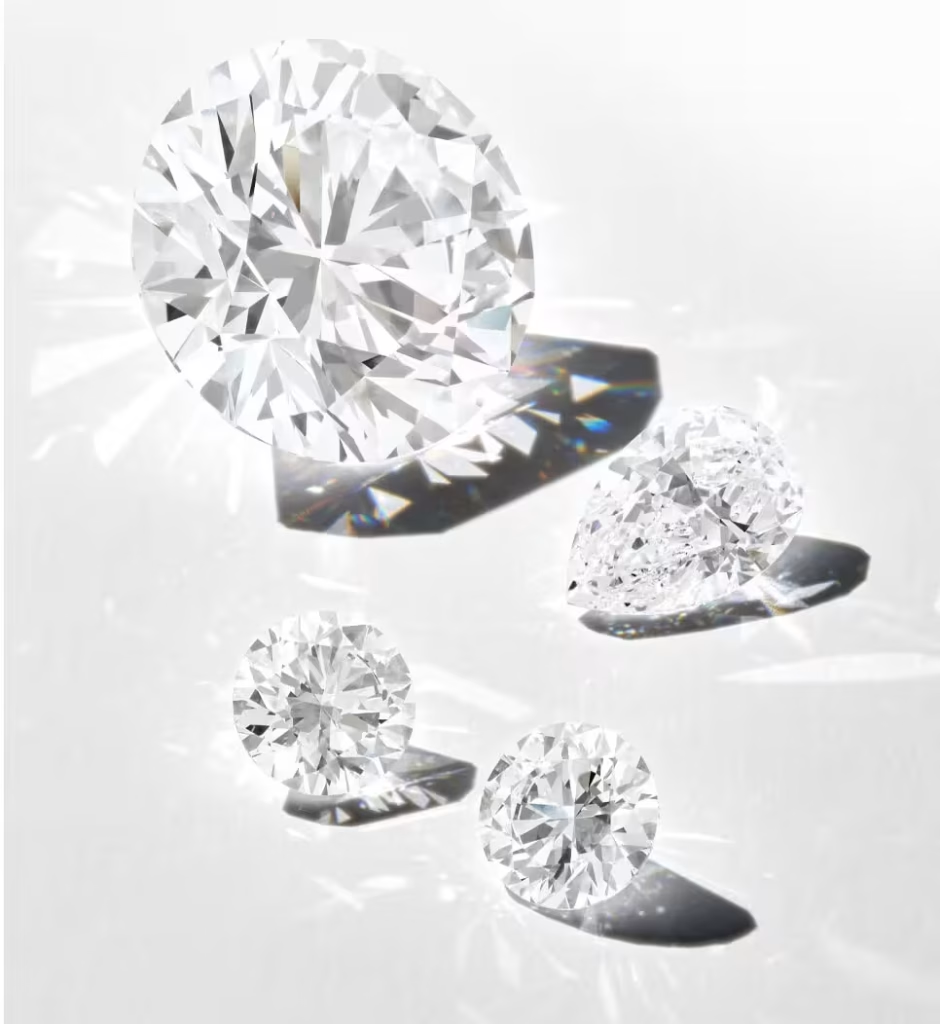
Together, these two manifestations of De Beers’ legacy – one forged over billions of years deep within the earth, the other woven through a century of human creativity and emotion – tell a remarkable story about the evolution of desire, symbolism, and the alchemy of marketing brilliance.
The Prince of Mines: Where Exceptional Diamonds Are Born
To understand the significance of the Jwaneng 28.88, one must first appreciate its birthplace. The Jwaneng mine, nicknamed “the Prince of Mines,” stands as the richest diamond mine in the world by value – not merely productive, but legendary for the exceptional quality of gems it yields. Discovered in February 1973 in the Naledi River Valley (whose name translates poetically as “Valley of the Stars”), the mine commenced operations in 1982 as a joint venture between De Beers and the government of Botswana through their partnership company, Debswana.
The mine’s name itself carries poetry: “Jwaneng” means “a place of small stones” in Setswana, the native language of Botswana. Yet this humble designation belies the extraordinary treasures the mine has produced. Since opening, Jwaneng has generated over $100 billion in high-quality diamonds, producing approximately 12 million carats annually of gems so exceptional that they account for 60-70% of Debswana’s total revenue despite being only one of four major operations.
The discovery story reads like geological serendipity. De Beers exploration teams, employing innovative sampling techniques that included studying material brought to the surface by termites burrowing through 50 meters of Kalahari sediments, identified the diamond-bearing kimberlite pipe beneath the desert sands. What they found was not merely a deposit, but a volcanic treasure vault formed billions of years ago when magma surged from deep within the Earth’s mantle, carrying diamonds forged under unimaginable pressure and heat.
From 114 Carats to Perfection: The Art of Diamond Cutting
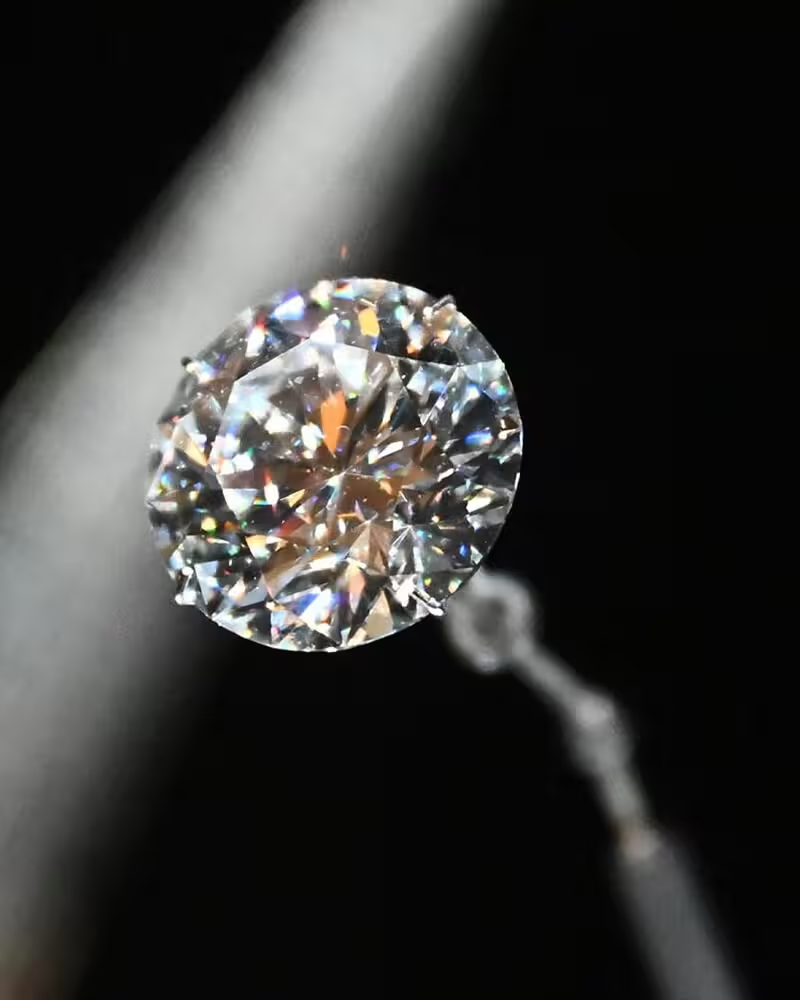
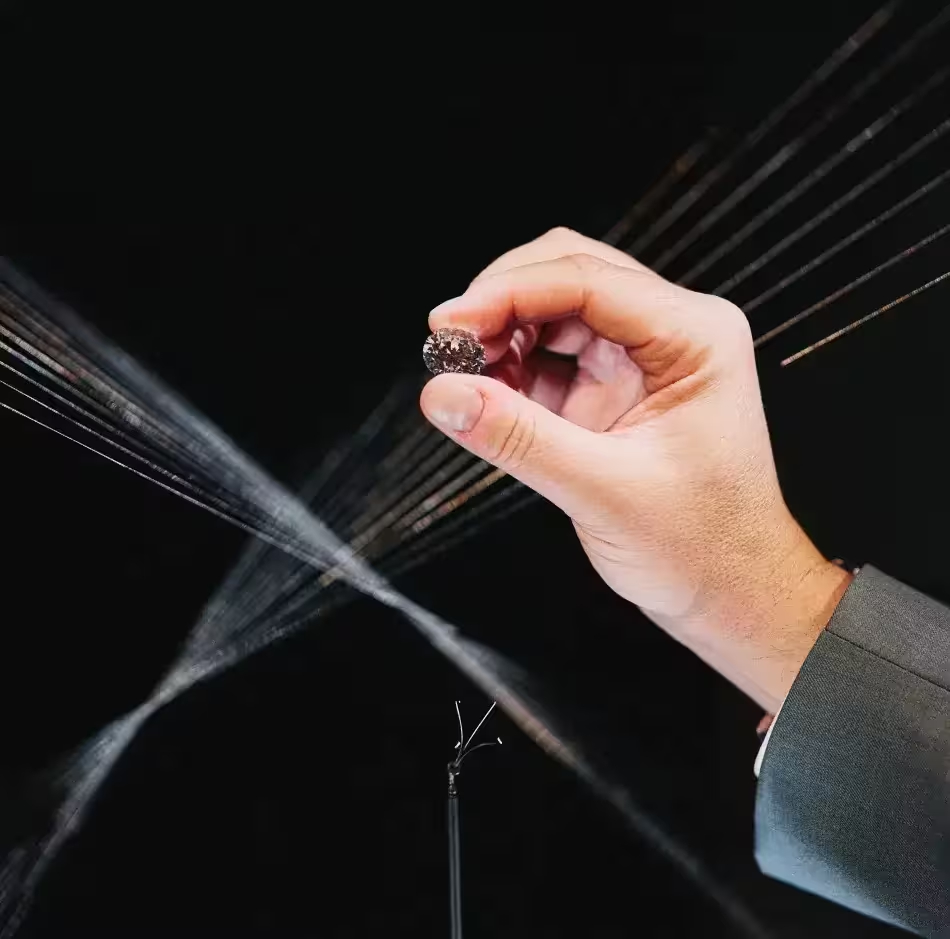
The journey of the Jwaneng 28.88 from rough stone to polished perfection represents months of meticulous study, planning, and extraordinary craftsmanship. De Beers’ master cutters began with a 114.83-carat rough diamond – already a significant find, but one whose true potential lay hidden beneath nature’s raw exterior.
The cutting and polishing process for such a valuable stone is never rushed. Each angle must be calculated with mathematical precision, each facet aligned to maximize the stone’s ability to capture and reflect light. The goal: to achieve the mesmerizing brilliance and fire that makes a diamond seem to glow from within. For the Jwaneng 28.88, the result is perfection in every technical dimension.
A D-color grade represents the absolute pinnacle of diamond colorlessness – completely devoid of any tint, as pure and transparent as a drop of crystallized water. Internally flawless means that even under 10x magnification, no inclusions or blemishes can be detected within the stone’s structure. These twin certifications of excellence place the Jwaneng 28.88 among the rarest diamonds in the world, a feat made all the more impressive by its substantial 28.88-carat size.
“The Jwaneng 28.88 is a perfect emblem of De Beers’ unmatched legacy in diamonds,” declared Quig Bruning, Sotheby’s head of jewels for the Americas, Europe, the Middle East, and Africa. “It’s at once a vanishingly rare feat of nature, combined with a master class in diamond-cutting and polishing.”
A Cultural Icon Turns 100: How “A Diamond Is Forever” Changed Everything
The timing of the Jwaneng 28.88’s debut is no coincidence. De Beers chose to unveil this extraordinary gem alongside the launch of A Diamond Is Forever: The Making of a Cultural Icon 1926-2026, a 240-page volume that traces one of the most successful marketing campaigns in history – and in doing so, reveals how De Beers fundamentally transformed humanity’s relationship with diamonds.
Before the 1930s, diamond jewelry existed almost exclusively within the upper echelons of society. Luxury houses guarded their mystique jealously, fostering only private relationships with elite clients. Diamonds were treasures exchanged discreetly among royalty and the ultra-wealthy, inaccessible symbols of a world most could only imagine from afar.
De Beers revolutionized this paradigm. Rather than preserving diamonds as rarified objects for the few, the company revealed their wonder to a wider audience, redefining them as essential gifts for romantic milestones, personal achievements, and aspirational lives. Diamonds became democratized – not in the sense of being available to all, but in the revolutionary idea that they should be accessible to anyone marking life’s most meaningful moments.
The cultural shift accelerated dramatically in 1947 when copywriter Frances Gerety created four simple words that would reshape global culture: “A Diamond Is Forever.” This declaration transcended mere advertising to become a philosophy, enshrining the diamond as a promise of enduring love, an eternal commitment that could withstand the passage of time. Gerety’s phrase appeared on archival advertisements, magazine placements, and celebrity endorsements, weaving itself into the very fabric of how societies across the world conceptualized romance and commitment.
Where Art Meets Commerce: Picasso, Dalí, and the Elevation of Diamond Desire
What distinguishes De Beers’ approach from typical luxury marketing is the company’s strategic collaboration with some of the 20th century’s most celebrated artists. The Assouline volume showcases commissioned works from Pablo Picasso, Salvador Dalí, and Raoul Dufy – artistic titans whose involvement elevated diamond advertising to the realm of fine art.
These weren’t merely commercial illustrations; they were genuine artistic expressions that drew direct parallels between a diamond’s rarity – each stone formed over billions of years deep within the earth – and the creative genius of human imagination. By associating diamonds with the world’s most revered artists, De Beers positioned these gems as worthy of the same cultural reverence accorded to masterpieces hanging in museums and galleries.
The exhibition curated by Sophie Oppenheimer at Maison Assouline for the book launch brought this artistic heritage to life, showcasing select campaign works from the late 1940s and early 1950s alongside pieces from De Beers London that chart the stylistic evolution of diamond jewelry across the century. Guests – including Poppy Delevingne, Nathalie Emmanuel, Archie Madekwe, and creatives Susie Lau and Melissa Holdbrook-Akposoe – explored three floors of visual storytelling while enjoying cocktails, champagne, and the sophisticated soundtrack provided by DJ Nikki Beatnik.
Hollywood’s Love Affair: When Diamonds Met Stardom
The 1960s cemented diamonds’ association with glamour through their adoption by Hollywood’s most luminous stars. Marilyn Monroe immortalized the relationship in “Diamonds Are a Girl’s Best Friend,” while Audrey Hepburn’s iconic portrayal in Breakfast at Tiffany’s made diamonds synonymous with elegance and sophistication. Elizabeth Taylor, perhaps the most famous diamond collector in Hollywood history, declared in a 1991 fragrance commercial that diamonds brought her luck – a sentiment that resonated with admirers worldwide.
De Beers’ 1990s “Shadows” campaign paired diamonds with Karl Jenkins’ neoclassical composition “Palladio,” capturing the gemstone’s authentic, unique, and everlasting essence through both visual and auditory artistry. The campaign reinforced what had become cultural truth: diamonds represented not merely wealth, but refined taste, timeless beauty, and enduring value.
The Modern Diamond Narrative: Responsibility Meets Romance
As we move through 2026, the conversation surrounding diamonds has expanded beyond romance and glamour to encompass provenance, sustainability, and ethical stewardship. Modern consumers – particularly younger, more discerning buyers – still desire the romance and allure that diamonds represent, but they also demand transparency about where their stones originate and how they’re sourced.
This evolution aligns perfectly with Botswana’s story. The partnership between De Beers and the Botswana government stands as a model of responsible resource management. When Botswana gained independence in 1966, it was one of the poorest countries in the world. Today, thanks to prudent management of its diamond wealth, it has transformed into a middle-income nation with aspirations of achieving high-income status by 2036.
Diamonds account for approximately one-third of Botswana’s GDP and over 80% of export earnings. Debswana employs over 6,400 people, more than 93% of whom are Batswana citizens. Revenue from diamond mining has funded public services including education, healthcare, and infrastructure development, significantly improving quality of life across the nation. The Jwaneng mine alone has contributed over $25 billion to Botswana’s economy since operations began.
This socioeconomic transformation adds another dimension to the Jwaneng 28.88’s value. The diamond represents not only geological rarity and aesthetic perfection, but also a model of how natural resources can be ethically managed to benefit entire nations and populations.
The April Auction: Where Heritage Meets Market Value
On April 23, 2026, during Sotheby’s Hong Kong Luxury Week, the Jwaneng 28.88 will face the ultimate test of its allure: the auction block. With an upper estimate of $2.8 million (approximately $97,000 per carat), the stone carries a valuation that reflects both its exceptional technical qualities and its cultural significance as a symbol of De Beers’ century-long influence.
For collectors, the Jwaneng 28.88 offers something increasingly rare in today’s market: impeccable provenance combined with museum-quality characteristics. The mine-to-market story is complete and transparent, from its formation billions of years ago in the earth’s mantle, through its discovery in the world’s richest diamond mine, to its transformation by De Beers’ master craftsmen, and finally to its presentation alongside a cultural retrospective celebrating a century of diamond heritage.
The auction represents more than a commercial transaction. It’s an opportunity to own a piece of geological history, cutting-edge craftsmanship, and cultural legacy – all crystallized in a stone small enough to rest in the palm of one’s hand yet carrying the weight of billions of years and a hundred years of storytelling.
The Enduring Power of Forever
What the Jwaneng 28.88 and the Assouline volume illuminate together is how De Beers succeeded in creating something far more valuable than a market for luxury goods. The company created a cultural language, a shared system of symbols and meanings that transcends borders, languages, and generations.
“A Diamond Is Forever” proved to be more than a tagline – it became a promise that resonates across cultures and centuries. As author and curator Melanie Grant noted during a panel discussion at the Assouline launch, “De Beers opened the door to the masses with the slogan A Diamond Is Forever, pushing diamonds forward, not just into people’s actual lives, but into a place where the diamond itself became a democratic thing, whereas historically it was only for royalty.”
The phrase has been retired and revived multiple times over the decades, most recently in late 2023 for a refresh of the ’90s “Seize the Day” campaign. Yet its essential truth remains unchanged: diamonds, formed over billions of years under conditions of extreme heat and pressure, carry within them the promise of permanence in a world of constant change.
As we stand in 2026, looking back at a century of diamond culture and forward to its continuing evolution, the Jwaneng 28.88 serves as a perfect ambassador for this dual timeline. It is simultaneously ancient – a geological miracle billions of years in the making – and utterly contemporary, representing the highest achievements of modern gemological science and craftsmanship.
For those fortunate enough to attend the Maison Assouline unveiling or to bid at the April auction, the opportunity is clear: to own not merely a flawless diamond, but a crystallized moment where nature’s rarest creations meet human culture’s most enduring narratives. In a world where trends come and go, some things – like the Jwaneng 28.88, like the promise of forever – are genuinely timeless.
