

In the pantheon of Swiss watchmaking, few collections carry the weight of heritage quite like the Omega Constellation. Born in 1952 as Omega’s flagship chronometer line, the Constellation represented an audacious promise: serially produced wristwatches that could match the precision of observatory-tested timepieces, brought not to a privileged few, but to discerning collectors worldwide. For over seven decades, this collection has evolved through dramatic transformations – from the dramatic pie-pan dials of the 1950s to Gerald Genta’s revolutionary C-shaped cases of the 1960s, culminating in the bold Manhattan design with its iconic claws that defined the 1980s.

Now, Omega returns to the collection’s most celebrated era with the Constellation Observatory – a nine-reference debut that resurrects mid-century design codes while simultaneously pushing the boundaries of horological certification in ways never before achieved.
The Pie-Pan Returns: A Design Language Forged in Omega’s Golden Age
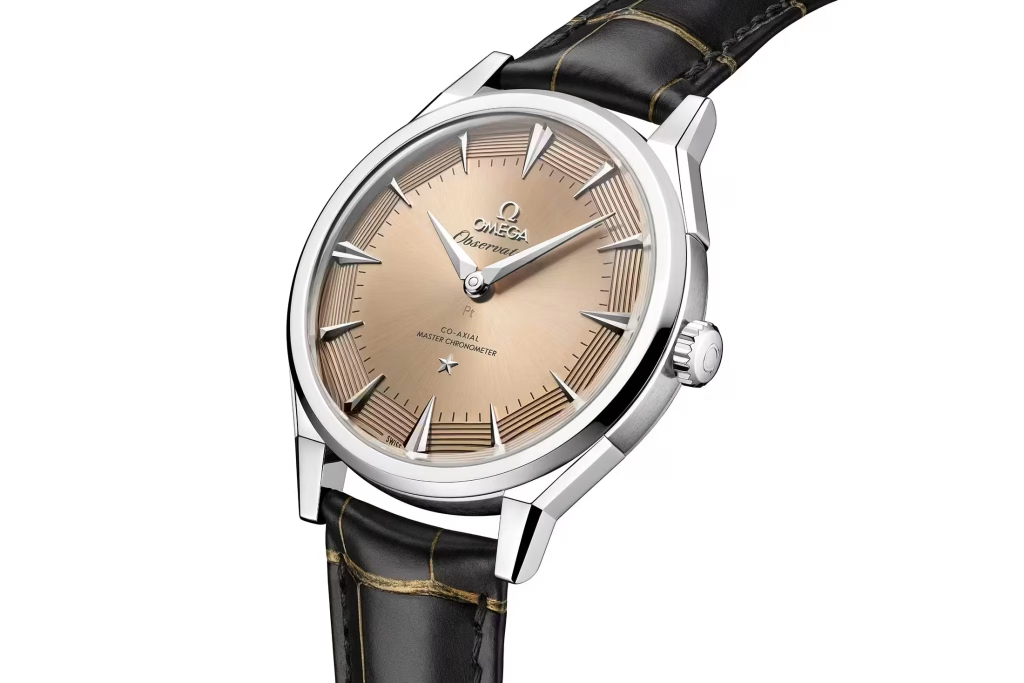
To understand the significance of the Constellation Observatory, one must first appreciate the visual vocabulary it resurrects. The “pie-pan” dial – so named for its resemblance to an inverted baking pan with a raised central surface and twelve faceted edges sloping downward to the hour markers – emerged in 1952 as the Constellation’s defining characteristic. This wasn’t mere aesthetics; the faceted design served a dual purpose, enhancing legibility while creating an optical play of light that transformed time-reading into a visual experience.
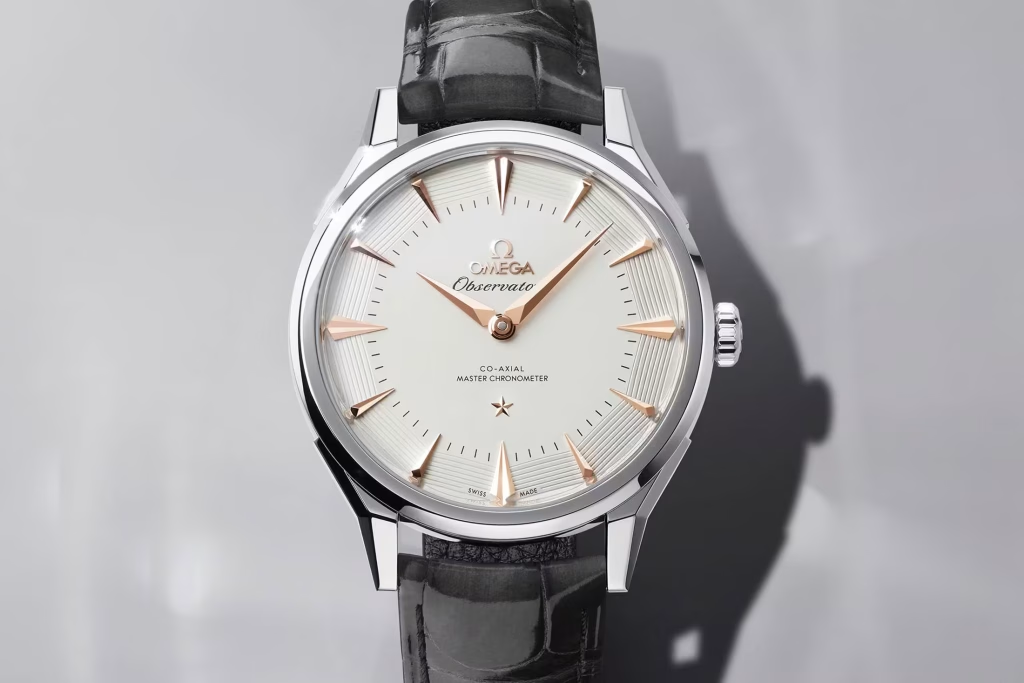
The earliest Constellation models, including the legendary references 2652 and 2943, showcased this architectural dial alongside another distinctive element: dog-leg lugs. Also known as “grasshopper lugs” for their sharply angled, almost insect-like silhouette, these case extensions represented the cutting edge of 1950s watch design – dramatic, sculptural, and unapologetically bold. Combined with dauphine hands and kite-form applied indices crafted in gold, these watches embodied the era’s conviction that precision instruments should also be objects of beauty.
During the late 1950s and early 1960s, the Constellation’s golden age, these watches accounted for approximately 15% of Omega’s entire production – an extraordinary figure that speaks to their cultural resonance. Originally conceived as a challenger to Rolex’s Datejust, the Constellation carved its own path, becoming the watch of choice for executives, engineers, architects, and professionals who valued both certified precision and understated elegance. Elvis Presley famously wore a black-dial Constellation Calendar during this era, cementing the collection’s association with impeccable style and magnetic presence.

From Heritage to Innovation: The Constellation Observatory’s Contemporary Revival
The new Constellation Observatory doesn’t simply recreate vintage aesthetics – it reinterprets them through a thoroughly modern lens. At 39.4mm in diameter, 12.23mm in height, and 47.2mm lug-to-lug, the proportions reflect contemporary preferences while providing substantially more canvas for those dramatic polished facets to catch and reflect light. The additional surface area transforms the pie-pan from a subtle detail into an architectural statement, especially pronounced in the hand-guillochéd versions found on precious metal models.
The dog-leg lugs return in a modern interpretation, maintaining their distinctive angled profile while incorporating refined brushing on the sides and polished facets that create striking contrast. Limited brushing extends to portions of the caseback, allowing the predominantly polished case to gleam with the same light-capturing intensity that made 1950s Constellations so visually arresting.
Perhaps most notably, the Observatory embraces a two-hand design – hours and minutes only, without the central seconds hand found on nearly all modern mechanical watches. This decision recalls the even earlier 1948 Omega Centenary, the limited-edition chronometer that inspired the Constellation’s creation. The result is a dial of extraordinary visual purity, where nothing distracts from the interplay between the faceted pie-pan, the stubby dauphine hands, and the sharply pointed kite-form indices.

A Kaleidoscope of Materials: Nine Expressions of Excellence
Omega’s material strategy for the Constellation Observatory reveals the collection’s ambitions to serve multiple clientele, from steel-loving enthusiasts to precious metal connoisseurs demanding the absolute pinnacle of decorative craftsmanship.
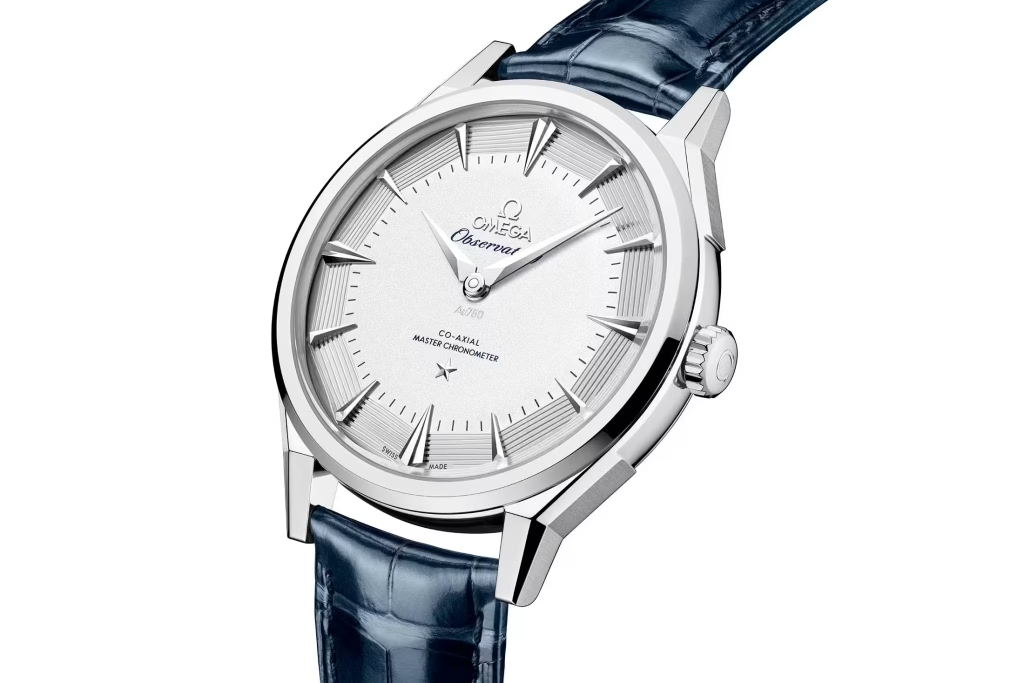
The four steel models – crafted in Omega’s proprietary O-MEGASTEEL alloy for enhanced scratch resistance and brighter luster – offer compelling diversity. Sunray-brushed dials appear in verdant green and deep navy, while a matte silver dial provides classical restraint. The collection’s steel headliner features a glossy black ceramic pie-pan dial, a technical achievement that maintains the faceted geometry in an entirely different material, creating depth and dimension impossible to achieve in metal.
Ascending into precious metals, the collection offers singular expressions in 18K Sedna Gold (Omega’s proprietary rose gold alloy), 18K Canopus Gold (white gold), and 18K Moonshine Gold (a warmer, more vintage-toned yellow gold). The Moonshine Gold variant offers an additional option: a stunning nine-link brick-style bracelet that recalls the iconic Constellation Grand Luxe models of the 1950s, where matching precious metal bracelets represented the absolute apex of the collection.
The collection’s crown jewel is the Platinum-Gold edition – a unique Omega alloy combining platinum with a percentage of gold, paired with a dial PVD-coated in what Omega describes as “yellowish platinum.” This model receives the Calibre 8915 in “Grand Luxe” finishing, featuring a Sedna Gold rotor base and an Observatory medallion in white gold enameled with aventurine glass and white opal – an extraordinary amount of decorative handwork that places this watch in conversation with traditional haute horlogerie.

The Art of the Dial: Hand-Turned Guilloché Meets Modern Precision
The dials themselves represent a masterclass in decorative technique and visual hierarchy. On precious metal models, artisans hand-turn guillochéd grooves into each of the pie-pan’s twelve facets – a time-intensive process that creates unique patterns of light reflection impossible to replicate through industrial means. This traditional technique connects the Observatory directly to the hand-finishing heritage of 1950s haute horlogerie.
Steel models achieve similar visual effect through stamped grooves – a concession to accessibility that nonetheless preserves the essential optical character. Omega deserves credit for maintaining decorative parity across price points; the visual experience differs in execution but not in intent.
One contentious design choice bears mention: precious metal dials (and the ceramic dial) display their hallmarks engraved on the dial front. “AU750” announces 18K gold composition, while ceramic models bear “ZrO2” for zirconium dioxide. For some collectors, these inscriptions break the illusion of timelessness, introducing technical specifications onto what would otherwise be a pure aesthetic statement. For others, they represent transparency about materials and manufacturing – a small price for absolute clarity about what one owns.
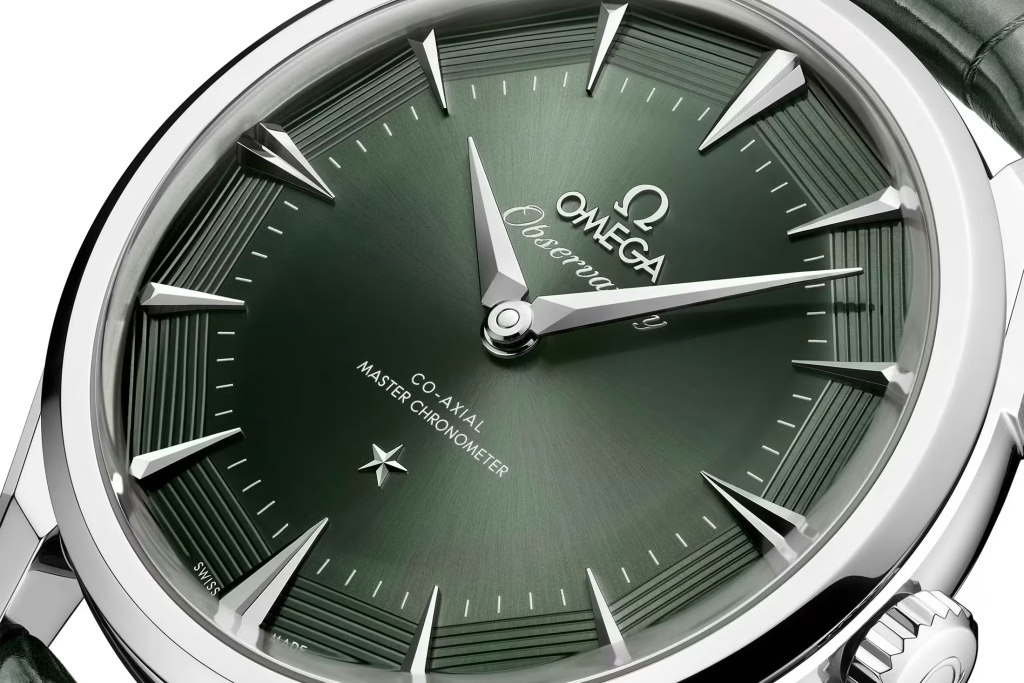
Breaking New Ground: The First Two-Hand Master Chronometer
Beyond aesthetics, the Constellation Observatory achieves something genuinely unprecedented in modern horology: it becomes the first two-hand watch ever to receive Master Chronometer certification. This accomplishment required Omega to fundamentally reimagine certification methodology.
Traditional Master Chronometer testing relies on measuring a watch’s seconds hand position to gauge precision across METAS’s rigorous eight-test protocol (which includes COSC chronometer certification as merely its foundation, adding magnetic resistance, water resistance, and power reserve accuracy testing that simulate real-world wearing conditions). Without a seconds hand, conventional measurement becomes impossible.
Enter the Laboratoire de Précision, founded in 2023 by Omega as an independent certification body certified by both METAS for Master Chronometer testing and SAS for chronometer certification. The laboratory developed an entirely new testing methodology utilizing acoustic measurements and optical hand-tracking to certify timepieces without seconds hands. The Constellation Observatory becomes the first watch measured and certified through this pioneering process, marking a genuine innovation in horological standards.
The movements powering this achievement – Calibre 8914 for steel models and Calibre 8915 for precious metals – are two-hand derivatives of Omega’s proven 89XX series, operating at 25,200 vibrations per hour (3.5 Hz) with 60-hour power reserves. The 8915 adds precious metal accents in the balance bridge and rotor, with “Luxe” and “Grand Luxe” finishing tiers differentiating the regular precious metal models from the Platinum-Gold flagship.
Elvis Would Approve: The Constellation’s Enduring Cultural Resonance
The Constellation’s cultural footprint extends far beyond technical specifications. Throughout the 1950s and 1960s, these watches became synonymous with a particular type of understated success – worn by professionals who had achieved distinction in their fields and sought timepieces that reflected both precision and taste without ostentation.
Elvis Presley’s affinity for the Constellation during this era – documented in countless photographs and confirmed through auction sales of his bejeweled Constellation – anchored the collection in popular imagination as the choice of artists with impeccable style. Unlike tool watches that proclaimed their wearer’s adventurous spirit, or dress watches that announced formal occasions, the Constellation suggested something more nuanced: magnetic presence combined with technical sophistication.
This cultural positioning makes the Observatory’s revival particularly resonant. In an era where watch marketing often emphasizes extreme sports, expedition sponsorships, and brand ambassadors scaling mountains or diving to impossible depths, the Constellation Observatory offers an alternative narrative: the watch for those whose achievements occur in offices, studios, and boardrooms, where precision matters and aesthetic refinement speaks volumes.

The Haute Horlogerie Question: Pricing in Context
Pricing for the Constellation Observatory positions the collection firmly in luxury territory, with steel models starting at $10,900 (ceramic dial at $12,200) and precious metal versions ranging from $37,900 (Sedna and Moonshine Gold on strap) to $59,100 (Moonshine Gold on bracelet), with the Platinum-Gold edition at $57,800.
This pricing invites inevitable comparisons. A Lange 1 in platinum – widely considered among haute horlogerie’s finest – actually costs slightly less than the Platinum-Gold Constellation Observatory. While not an apples-to-apples comparison (the Lange offers date and power reserve complications versus the Omega’s hand-guillochéd gold dial), it demonstrates that Omega’s upmarket positioning now reaches price points where traditional haute manufacture competition becomes direct.

Yet the comparison also highlights Omega’s value proposition. For the price of a Canopus Gold Moonwatch ($44,000, similar to the Canopus Gold Constellation Observatory), buyers exchange chronograph complications for hand-guilloché gold dials and two-hand purity. The choice reflects personal values: technical complexity versus decorative craftsmanship, sports watch functionality versus dress watch refinement.
For collectors evaluating the steel references at 10,900,differentmathematicsapply.ThisexceedstheConstellationGlobemaster(alsopie−panequipped)byapproximately3,800, with the Observatory offering less information (no date, no seconds) but cleaner aesthetics and certification innovation. It’s paying for subtraction – a luxury proposition that values visual purity over functional density.
A Collection Restored to Prominence
The Constellation has existed in Omega’s shadow for decades, overshadowed by the Speedmaster’s moon-landing fame and the Seamaster’s James Bond associations. Even within its own family, the modern Manhattan-style Constellation with integrated bracelet and signature claws commanded more attention than the Globemaster’s vintage-inspired alternative.
The Observatory changes this dynamic. By reuniting the pie-pan dial with dog-leg lugs for the first time since 1977, by embracing two-hand simplicity, and by achieving certification firsts that honor the collection’s precision heritage, Omega has created something that feels both historically grounded and genuinely novel.
Everything about these watches feels deliberate – from the decision to offer hand-guilloché on precious metals rather than universal stamping, to the choice of two hands over conventional three, to the development of entirely new certification methodology rather than simply exempting the watches from standard testing. This thoughtfulness suggests a collection built not for quarterly sales targets but for long-term positioning as Omega’s dressy flagship, a role the Constellation originated but gradually ceded over decades of design evolution.
For collectors who appreciate the 1950s as watchmaking’s design zenith, who value precision certification as more than marketing, and who seek dress watches that make statements through subtlety rather than complication density, the Constellation Observatory offers a compelling proposition. It’s Omega proving that sometimes, moving forward means first looking back – not with nostalgia, but with clear-eyed appreciation for what made greatness recognizable in the first place.
The Observatory may well mark the moment when the Constellation reclaimed its stars.
