
Several established fine jewelry ateliers now offer lab-grown diamonds set at the same craftsmanship tier as their mined-stone commissions — same bench, same setters, same finishing standards, the only variable being the origin of the stone itself. This is not a side business or a concession to a younger, price-sensitive clientele. It is a considered expansion of what these houses believe a diamond is for. And it creates real friction in a market whose entire architecture has been built on rarity, geological time, and the story of extraction. Lab diamond engagement rings force a question the trade has spent a century avoiding: how much of a diamond’s value was ever really about the stone, and how much was about the narrative wrapped around it.
That question does not have a comfortable answer, which is precisely why it is worth asking properly. This piece is not an argument for or against lab-grown diamonds. It is an attempt to understand, with the same rigor a collector would apply to a vintage Cartier or a Burmese sapphire, what actually determines whether a lab diamond engagement ring is a serious object or a disposable one.
At a glance: A luxury lab diamond engagement ring earns its place through secure construction, well-proportioned metalwork, independent documentation and an original design—not through carat weight alone. The ten rings below span global fashion houses, heritage institutions and specialist fine-jewelry ateliers so you can compare those priorities in real products.
Editor’s note: Product specifications and official shopping links were checked on August 11, 2026. Prices, configurations and availability can change by market; confirm the final grading report, dimensions, return terms and delivery date with the brand before ordering. The list is editorial and unranked.
10 Luxury Lab Diamond Engagement Rings: Quick List
- Prada Eternal Gold Laboratory-Grown Diamond Ring
- VRAI Signature Round Brilliant Platinum Engagement Ring
- Swarovski Eternity 1-Carat Solitaire Ring
- Pandora Era 1-Carat Lab-Grown Diamond Ring
- C de Courbet Four-Prong Engagement Ring
- 886 by The Royal Mint Frameset Emerald-Cut Ring
- Kimaï Dolly Bezel-Set Engagement Ring
- Smiling Rocks One-Carat Six-Prong Solitaire
- Lark & Berry Wild Cherry Diamond Engagement Ring
- VRAI Aurora Halo Round Brilliant Platinum Ring
What Lab-Grown Actually Means (and What It Doesn’t)
A lab-grown diamond is chemically, optically, and structurally a diamond. It is carbon arranged in the same crystal lattice, with the same hardness, refractive index, and dispersion as a stone formed in the earth. The distinction is one of origin, not composition. Gemological laboratories can identify that origin with specialized testing. Reporting conventions do differ: GIA has used Premium and Standard quality assessments for qualifying colorless-to-near-colorless lab-grown diamonds since October 1, 2025, while IGI continues to document the 4Cs.
Two production methods dominate the market. CVD diamonds (chemical vapor deposition) are grown by introducing carbon-rich gas into a chamber containing a diamond seed plate, where carbon atoms deposit layer by layer under heat. HPHT diamonds (high pressure, high temperature) replicate the earth’s natural formation conditions more directly, subjecting a carbon source to extreme pressure and heat until it crystallizes around a seed. Both methods produce gem-quality material suitable for fine jewelry, though the two processes can leave different growth signatures that a trained gemologist can identify under magnification.
What lab-grown does not mean is “simulant.” Cubic zirconia and moissanite are diamond substitutes with different chemical structures and inferior optical performance. A lab diamond is not an approximation of a diamond. It is one, full stop, made on a different timeline.
The Case for Lab Diamond Engagement Rings
The strongest argument for lab diamond engagement rings has nothing to do with price, though price is where the conversation usually starts. It has to do with design freedom. Because growers and cutters can produce repeated shapes and a broad range of sizes more predictably than the mined market supplies them, ateliers can explore unusual proportions and high-clarity center stones without holding the same level of rare natural inventory. That does not make every specification immediately available, but it can make ambitious scale and custom cutting more practical.
This has consequences for how designers think. Setters and designers working with a more predictable, more available supply of high-clarity stones can build settings around the stone’s proportions rather than compromising the design to fit whatever the mined market happens to offer that season. Several bridal-focused ateliers have begun treating lab diamonds as a design tool first, a value proposition second — using consistent, larger stones to explore settings, halo geometries, and pavé work that would otherwise require inventory most jewelers simply don’t carry.
There is also the matter of transparency—but it should not be assumed. Laboratory-grown origin must be disclosed, while the energy source, growth facility, cutting location and metal provenance require separate documentation. Some brands provide a short, traceable chain from grower to setter; others provide little beyond the grading report. Buyers choosing lab-grown for environmental or social reasons should ask for evidence of those claims rather than treating the production method itself as a complete sustainability certificate.
Editor’s Selection 01
1. Prada Eternal Gold Laboratory-Grown Diamond Ring
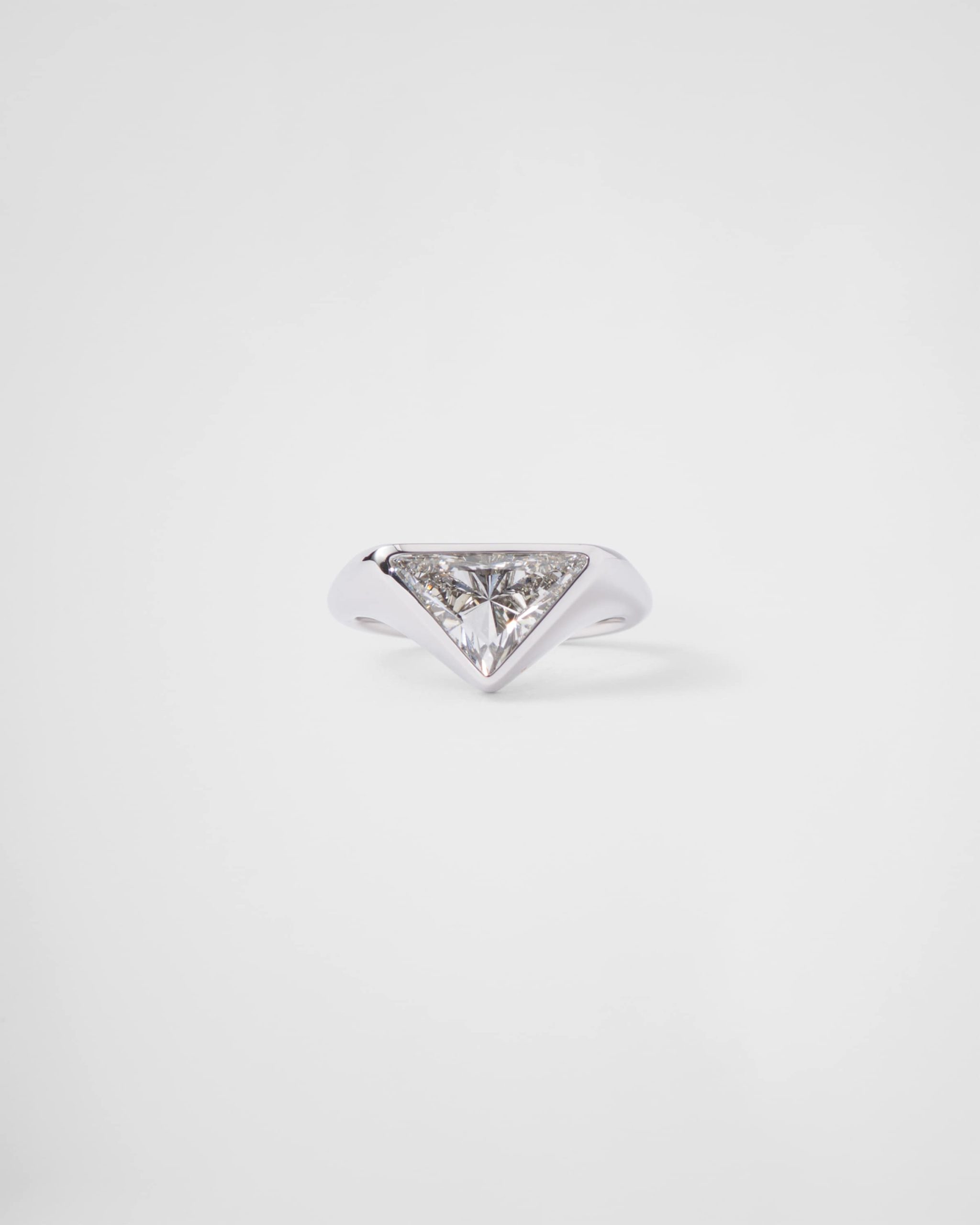
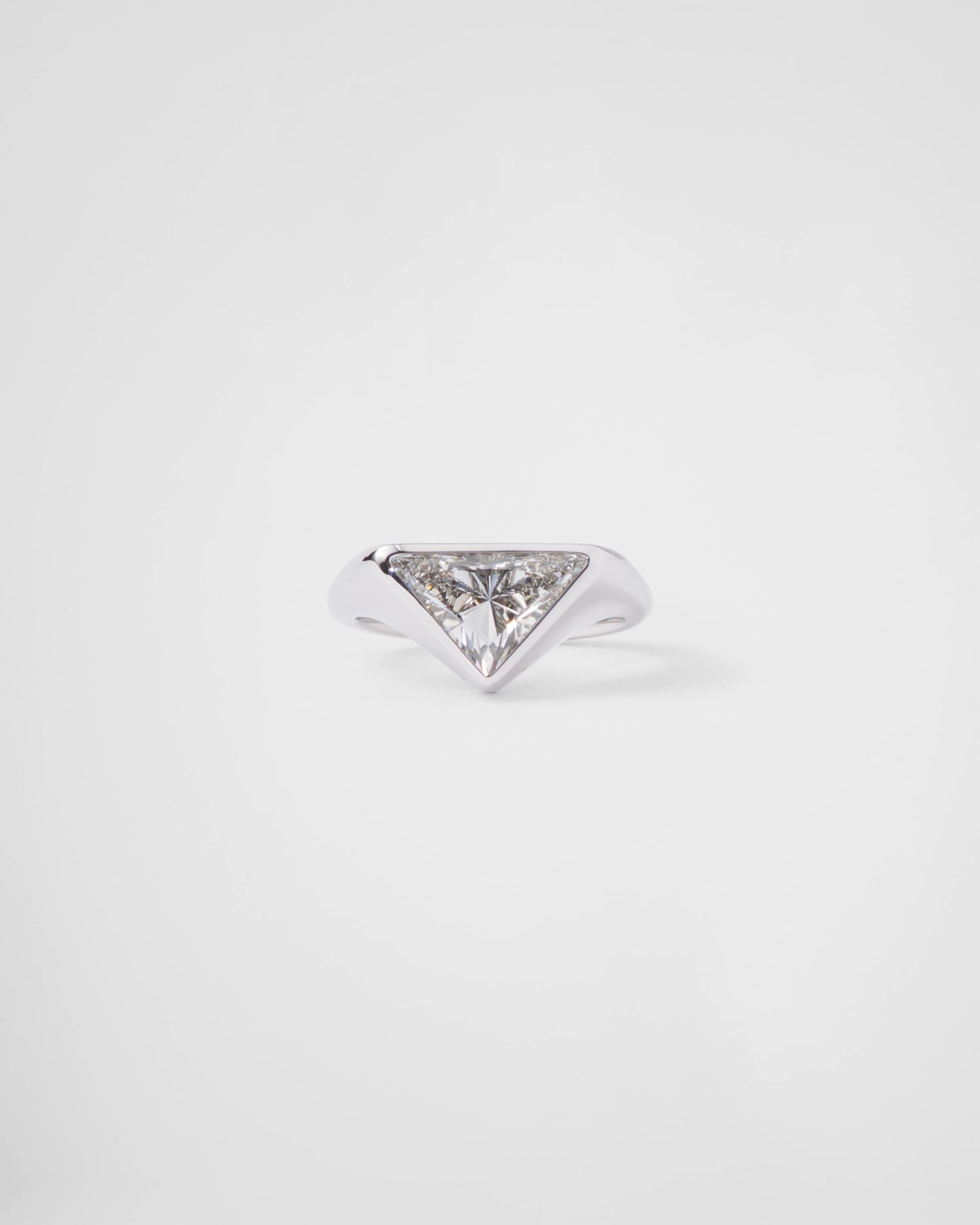
Prada translates its triangle into a proprietary laboratory-grown diamond cut, making the stone part of the house’s design language rather than a generic center stone. The made-to-order ring is crafted in Italy from 18-karat recycled white gold, and Prada lists approximately 3.28 total carats with Aura Blockchain traceability.
- Best for: a fashion-house signature and an unconventional center-stone silhouette.
- Key details: 18-karat recycled white gold; approximately 3.28 carats; Prada Cut laboratory-grown diamond; made to order.
Editor’s Selection 02
2. VRAI Signature Round Brilliant Platinum Engagement Ring

VRAI’s low-set Signature sling is designed to bring light beneath the diamond while allowing a wedding band to sit flush. The official configurator pairs the platinum setting with a VRAI-created round brilliant and lets the buyer adjust the center stone, band treatment and size.
- Best for: a restrained solitaire with a low profile and extensive configuration options.
- Key details: platinum; round brilliant VRAI-created diamond; plain 1.7 mm band in the linked configuration; made to order.
Where the Value Question Gets Complicated
Here is where the discipline required of a serious buyer actually begins. Mined diamond pricing, for all its flaws, is anchored to a controlled supply and a decades-old grading and distribution infrastructure that, whatever one thinks of it, has produced relative price stability for high-quality stones over long periods. Lab-grown diamond pricing has behaved very differently. As production capacity has scaled — more growers, more chambers, more throughput — per-carat prices for lab-grown stones have fallen substantially since they entered the bridal market in meaningful volume, and industry reporting suggests that trend has continued rather than leveled off.
This is not a flaw in the stones. It is a structural feature of a manufactured good subject to improving production efficiency, the same dynamic that governs almost every manufactured commodity. But it means the resale and long-term value logic that, rightly or wrongly, attaches to mined diamonds does not transfer to lab-grown material. A collector evaluating lab diamond engagement rings needs to hold two ideas at once: the stone is a genuine diamond, and it is also a product whose cost of production is falling and will likely continue to fall as growing technology matures.
The honest way to frame this is not “lab diamonds don’t hold value” — a claim too broad and too easily contradicted by circumstance to be useful — but rather that the value of a lab diamond engagement ring rests overwhelmingly in its design, its craftsmanship, and its materials beyond the stone itself, rather than in the stone’s rarity. That is a different value proposition than a mined diamond ring, not an inferior one. It simply needs to be understood on its own terms.
Editor’s Selection 03
3. Swarovski Eternity 1-Carat Solitaire Ring
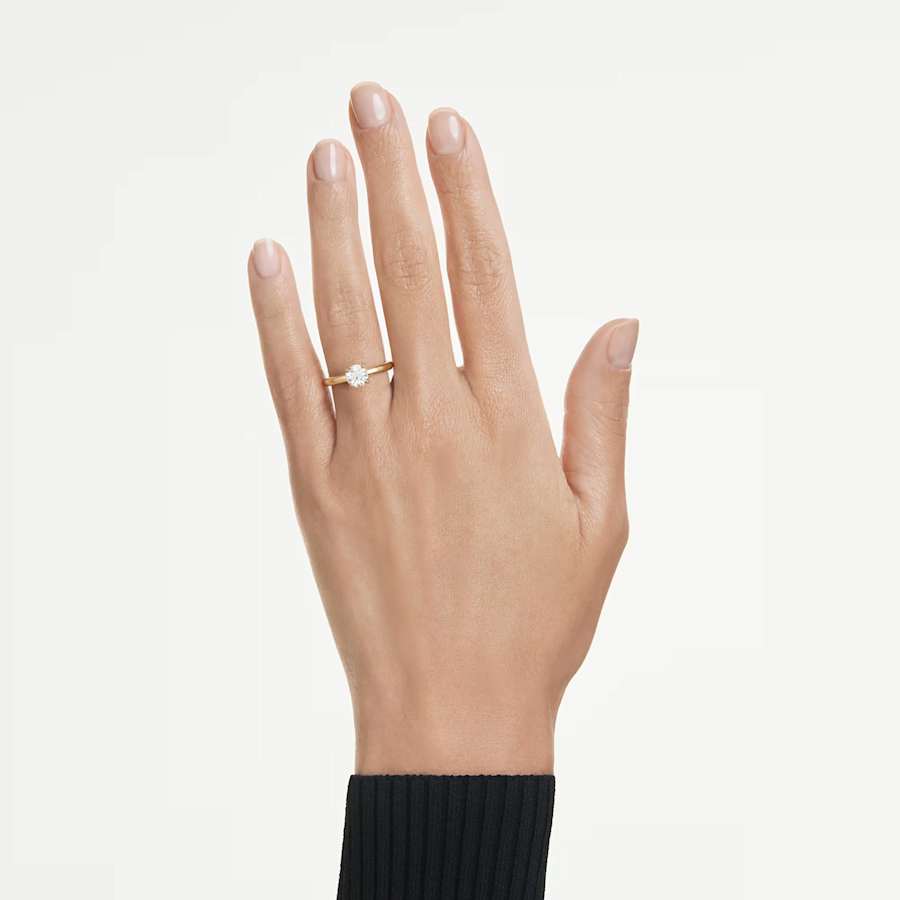
Swarovski’s Eternity solitaire places a 1-carat round laboratory-grown diamond in the house’s swan-inspired setting. The linked yellow-gold version is listed as G+ color, VS+ clarity and Excellent cut, with IGI certification; availability varies by country and size.
- Best for: a familiar global luxury name with clearly published diamond specifications.
- Key details: 14-karat yellow gold; 1.00-carat center stone; G+ color; VS+ clarity; IGI certified.
Editor’s Selection 04
4. Pandora Era 1-Carat Lab-Grown Diamond Ring
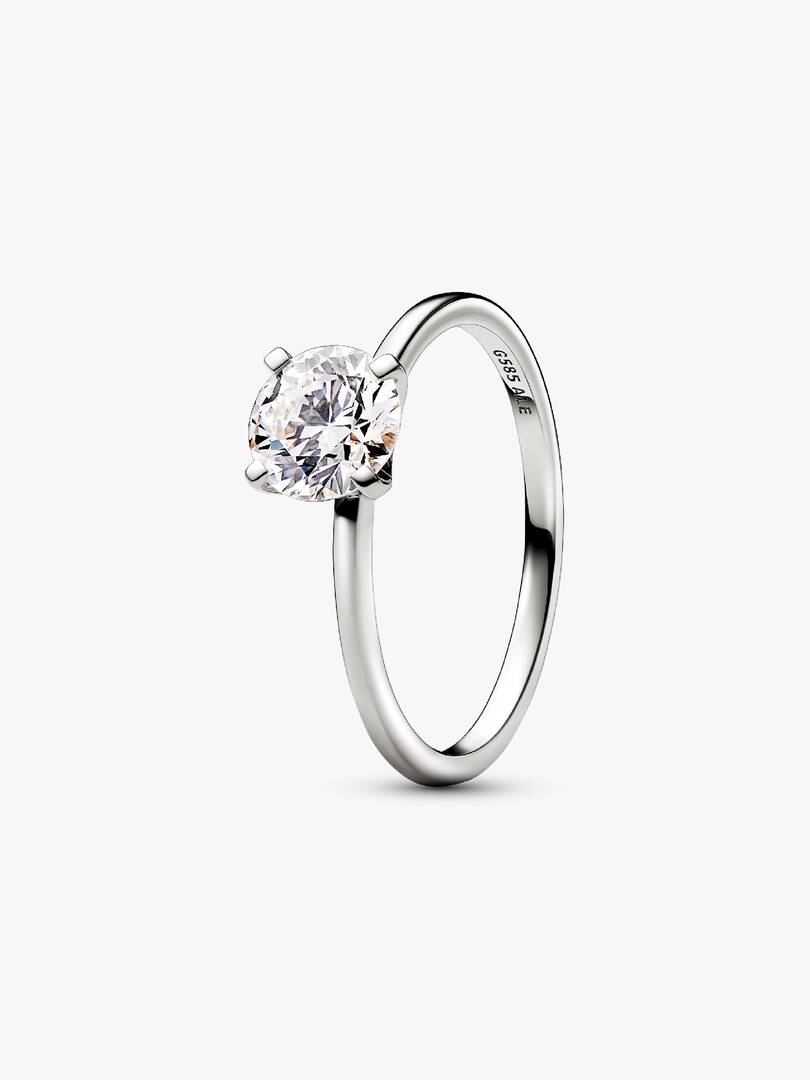
The Era ring is a useful reference point for buyers comparing globally distributed designs. Its four-prong white-gold setting exposes more of the round brilliant to light, and Pandora lists the 1-carat center as Excellent cut; unlike many configurators, it is sold as a finished branded ring.
- Best for: a straightforward, internationally recognizable one-carat solitaire.
- Key details: 14-karat white gold; 1.00-carat round brilliant laboratory-grown diamond; four-prong setting.
Craftsmanship Still Separates the Serious from the Commodity
The single biggest determinant of whether a lab diamond engagement ring is a considered purchase or a commodity purchase has almost nothing to do with the stone. It is the setting, the metalwork, and the hand behind both.
A poorly proportioned mount, thin shanks prone to distortion, prongs cut for speed rather than security, casting rather than hand-finishing at the edges where light and touch meet most often — these failures exist independent of what’s mounted at the center, and they are far more common in the volume end of the lab-grown market than in its considered upper tier. Because lab-grown stones have made larger, cleaner center stones more accessible, there is a real temptation among mass-market retailers to lead entirely with carat weight and let the setting be an afterthought. A four-carat stone in a mount that will wear thin at the shoulders within a decade is not a good ring. It is a good stone in a bad ring.
The ateliers doing this well apply the same standards to lab-grown commissions as to mined ones: hand-finished prongs, appropriately weighted shanks in 18k gold or platinum, considered proportion between stone and mount, and setting work executed by the same bench that would cut and set a comparable mined stone. The stone’s origin should change the sourcing conversation. It should not change the standard of construction. When evaluating any lab diamond engagement ring, the questions a buyer should ask are the same ones that apply to fine jewelry generally: who cut the metal, how is the stone secured, what happens to this ring in twenty years of daily wear.
Editor’s Selection 05
5. C de Courbet Four-Prong Engagement Ring
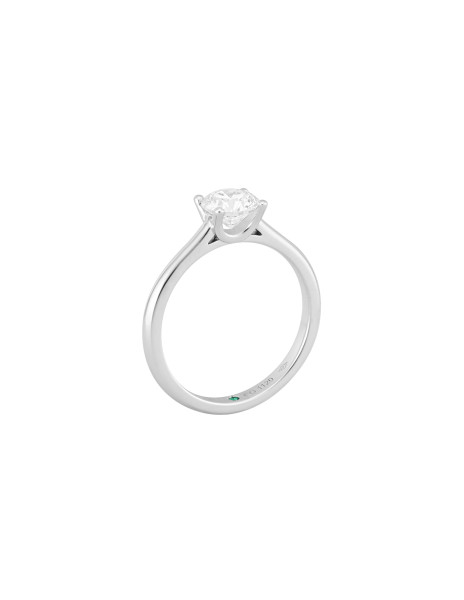
COURBET brings Place Vendôme codes to laboratory-grown diamonds through its signature C-shaped setting. The linked configurator offers brilliant, princess, pear, emerald, oval and cushion shapes in 18-karat recycled gold; the Maison currently handles requests through its studio while its online collections pause.
- Best for: a Parisian fine-jewelry point of view and a configurable signature setting.
- Key details: 18-karat recycled gold; laboratory-grown center diamond; multiple shapes and gold colors; inquiry/configurator purchase.
Editor’s Selection 06
6. 886 by The Royal Mint Frameset Emerald-Cut Ring
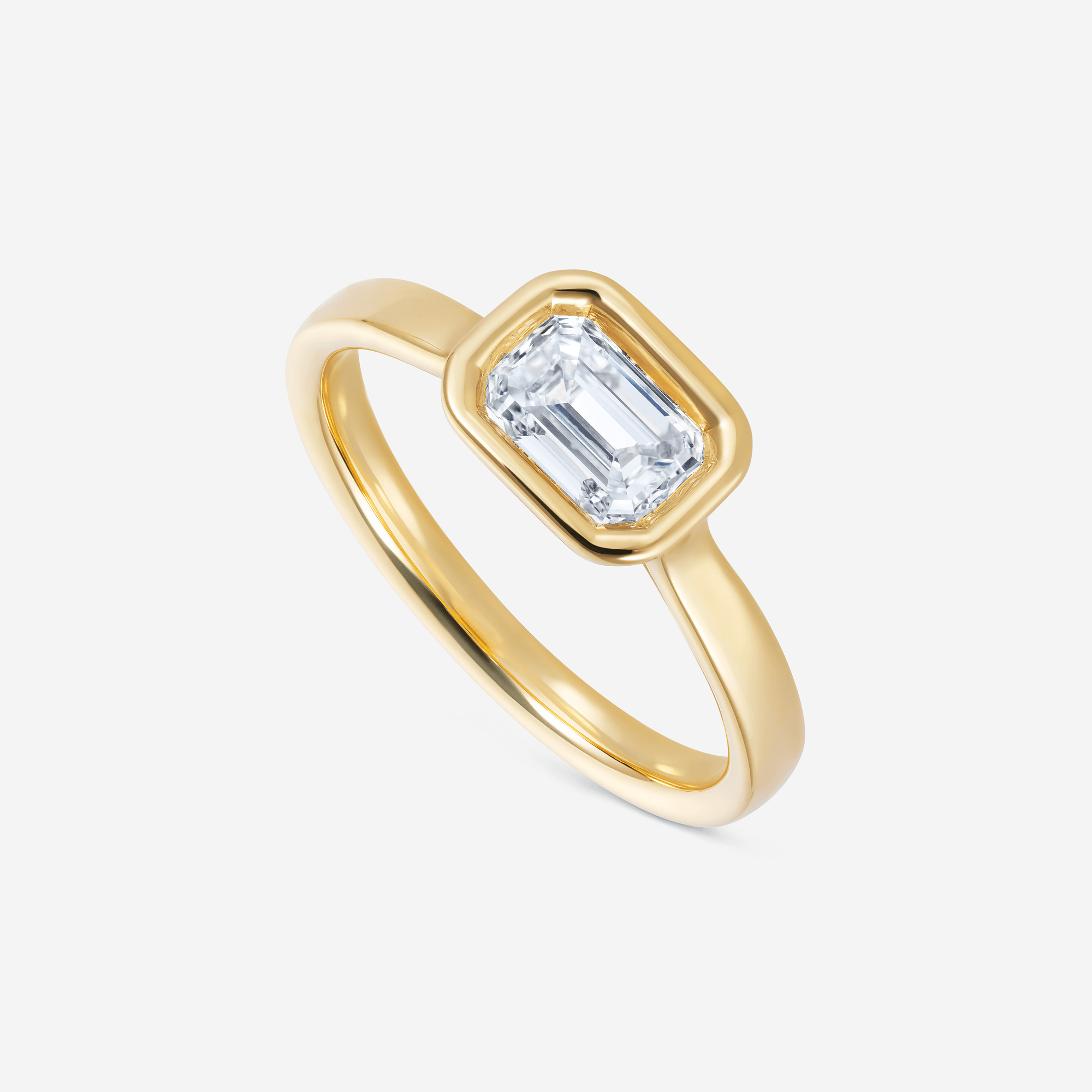
The Frameset design uses a reflective bezel-like rim rather than conventional prongs, protecting the corners of its emerald-cut diamond and emphasizing the metal. Its solid 18-carat yellow gold is recovered from electronic waste at The Royal Mint’s facility in Wales, giving the setting a documented material story beyond the center stone.
- Best for: architectural design, protected stone corners and a substantial gold presence.
- Key details: 18-carat yellow gold recovered from e-waste; emerald-cut laboratory-grown diamond; signature Frameset mounting.
Provenance, Certification, and What to Actually Verify
Independent documentation matters more, not less, with lab-grown stones because it confirms origin and records the stone’s assessed quality. Read the report rather than relying on the word “certified.” IGI continues to provide detailed 4Cs assessments for lab-grown diamonds. Since October 2025, GIA’s service for qualifying colorless-to-near-colorless lab-grown stones uses the overall terms Premium or Standard instead of the natural-diamond color and clarity nomenclature. A grading report identifies and assesses a stone; it is not an appraisal or a guarantee of resale value.
Buyers should treat the absence of clear disclosure as a serious warning sign, not a minor omission. Reputable jewelers laser-inscribe the girdle of lab-grown stones with a certificate number and often the word “lab-grown” or an abbreviation of it, a practice that exists specifically to prevent lab-grown material from being passed off, deliberately or carelessly, as mined. This inscription is typically invisible to the naked eye and only legible under magnification, so it does not compromise the stone’s appearance.
A short checklist for anyone evaluating a specific stone or ring:
- Confirm the report explicitly states laboratory-grown origin and verify its number on the laboratory’s own website.
- Match the report number to the laser inscription on the girdle under magnification.
- Check whether post-growth treatments and the CVD or HPHT growth method are disclosed when those details matter to your decision.
- Evaluate the setting independently: ask about metal purity, shank dimensions, prong or bezel construction and finishing.
- Request written substantiation for renewable-energy, recycled-metal or traceability claims.
- Read resizing, return, warranty and replacement policies—especially for made-to-order rings.
None of this is more onerous than the due diligence a serious buyer should already apply to a mined stone. It simply shifts the questions from geography and mining practice to manufacturing transparency.
Editor’s Selection 07
7. Kimaï Dolly Bezel-Set Engagement Ring
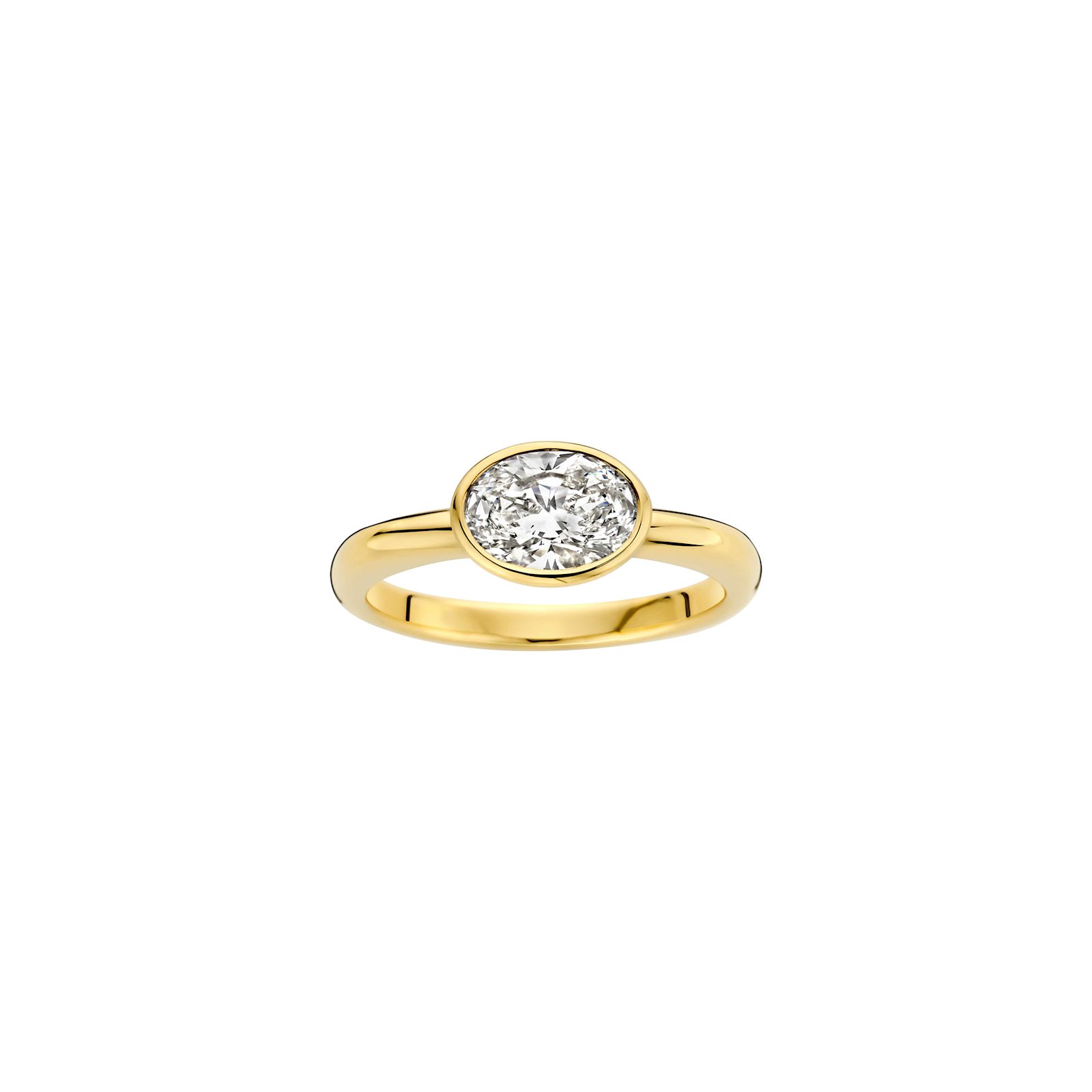
Kimaï turns an oval diamond east-west and encloses it in a smooth bezel, a practical departure from the high-set solitaire. The Dolly is configurable in recycled 18-karat gold or platinum; Kimaï says it preselects DEF color and VS+ clarity stones and supplies an IGI report, with GIA available on request.
- Best for: a contemporary east-west silhouette with a snag-resistant bezel.
- Key details: horizontal oval laboratory-grown diamond; bezel setting; recycled 18-karat gold or platinum; made to order.
Editor’s Selection 08
8. Smiling Rocks One-Carat Six-Prong Solitaire
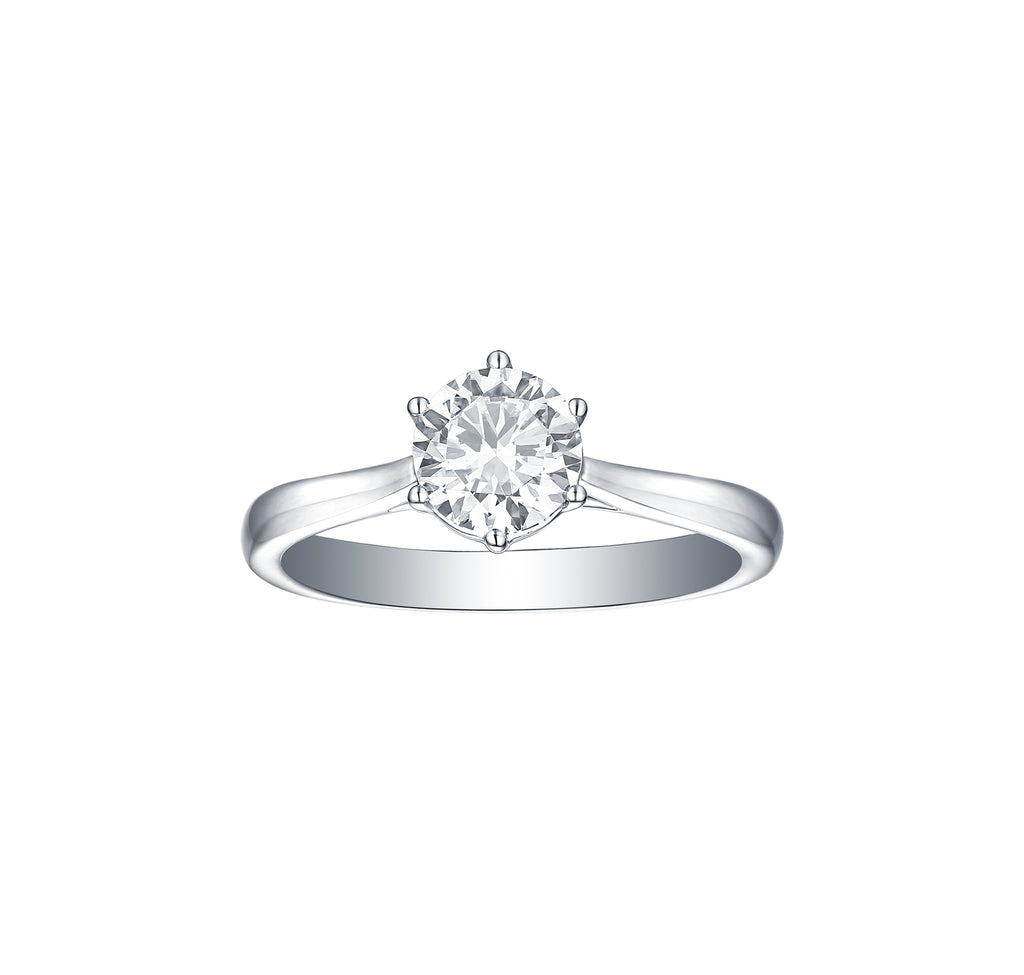
This classic six-prong solitaire is a clean certification check: Smiling Rocks lists a 1-carat IGI-certified center in the E-F color and SI1 clarity range. The brand also laser-inscribes its identification mark and directs a portion of purchases to customer-selected charitable causes.
- Best for: buyers who want a traditional six-prong profile with published baseline grades.
- Key details: 14-karat gold; approximately 1.00 carat; E-F color; SI1 clarity; IGI-certified center stone.
How Ateliers and Independent Jewelers Are Approaching Lab Diamonds
The most interesting shift in the bridal category is not that lab-grown diamonds exist. It is that a number of independent ateliers and design-forward jewelers have started treating them as a legitimate parallel offering rather than a downmarket add-on, presenting mined and lab-grown stones within the same design language and construction standard, differentiated by origin and price rather than by tier of craftsmanship.
This matters because it changes the cultural framing. When a lab-grown stone is offered as a lesser version of the “real” bridal experience — smaller settings, thinner metal, less considered proportion — it reinforces the idea that lab-grown is inherently a compromise. When it is offered within the same hand-finishing standard as a house’s mined-stone bridal work, the stone’s origin becomes a genuine choice rather than a consolation. Some independent designers have leaned further into this by building signature settings specifically conceived around the size and clarity consistency that lab-grown material makes accessible, rather than simply substituting a lab stone into a design conceived for mined-stone constraints.
The result is a widening gap within the lab-grown category itself, mirroring the gap that has always existed in mined diamonds between considered fine jewelry and mass-market production. A lab diamond engagement ring from a serious atelier and one from a high-volume online retailer may use stones of comparable grade, but the ring itself — its proportion, its metal, its longevity — can differ enormously. That gap, far more than the origin of the stone, is what a discerning buyer should be evaluating.
Editor’s Selection 09
9. Lark & Berry Wild Cherry Diamond Engagement Ring
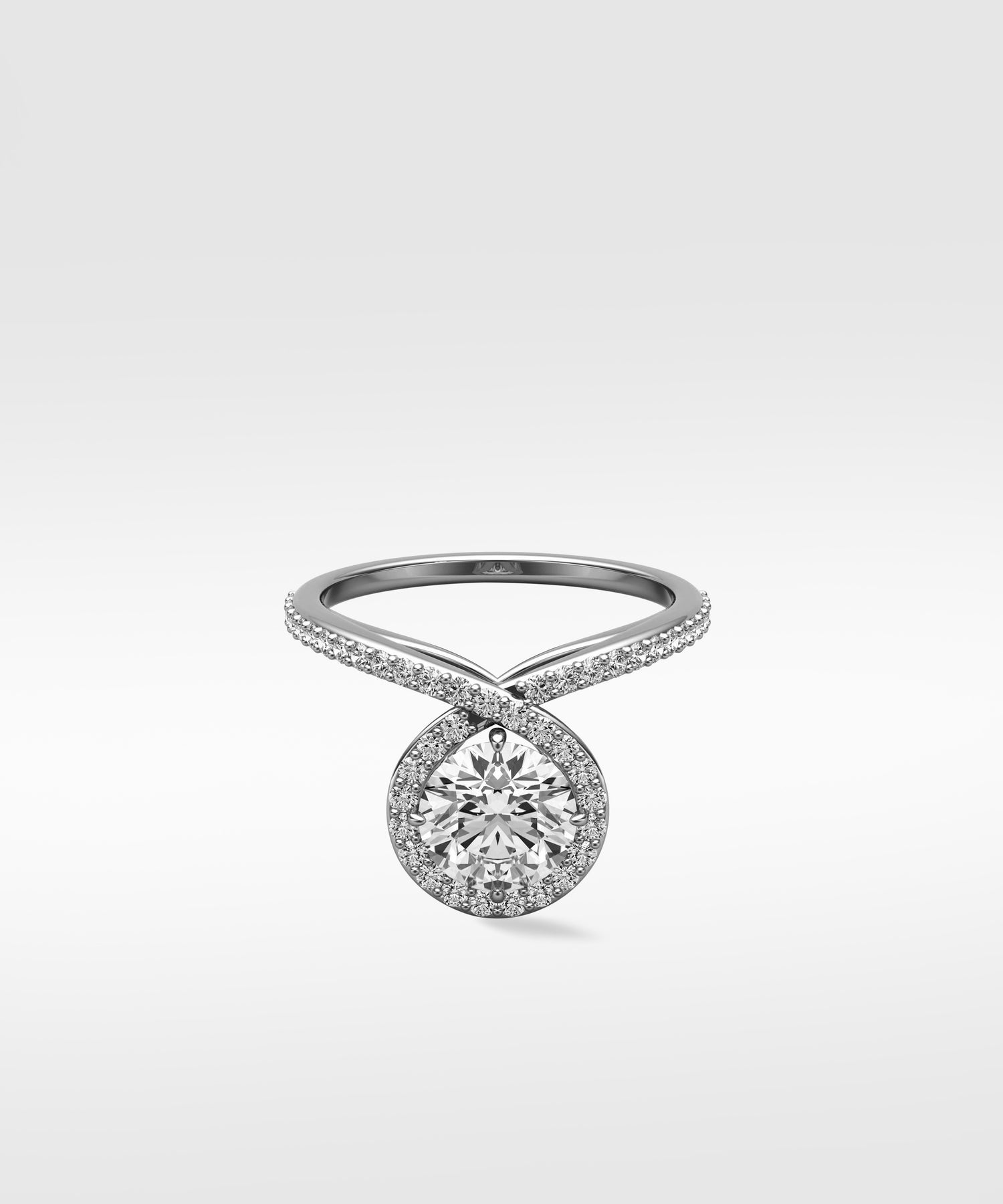
Wild Cherry demonstrates what becomes possible when the setting, not only carat weight, drives the purchase. A halo and twisting pavé band give the ring a distinct profile; the pictured version uses a 1.25-carat brilliant-cut center, while the setting can be ordered in platinum or 18-karat gold with an IGI- or GIA-documented lab-created diamond.
- Best for: a visibly designed, high-sparkle alternative to a plain solitaire.
- Key details: halo with twisting pavé band; platinum or 18-karat gold; configurable lab-created center diamond; made to order.
Editor’s Selection 10
10. VRAI Aurora Halo Round Brilliant Platinum Ring
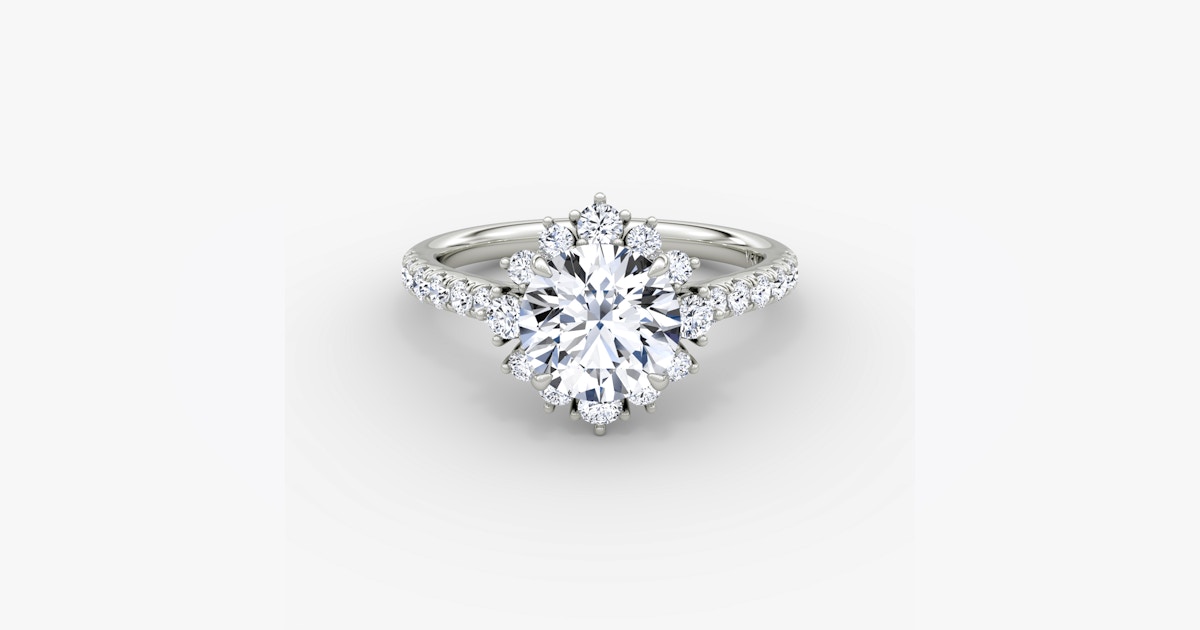
The Aurora Halo combines cathedral arches with a full halo, making construction and proportion more visible than in a plain solitaire. VRAI publishes unusually useful setting data: a 2.1 mm band, 6.8 mm setting height, approximately 5.90 g of platinum in size 6 and 0.56 carat total weight of pavé diamonds, shown with a 1.5-carat center.
- Best for: buyers who want a higher-profile, high-sparkle setting with published dimensions and metal weight.
- Key details: platinum; round brilliant VRAI-created center; pavé halo and band; 2.1 mm band; shown with a 1.5-carat center.
What This Means for the Modern Collector
For a collector accustomed to evaluating fine jewelry on craftsmanship, provenance, and design coherence, lab diamond engagement rings require a slightly recalibrated framework rather than a wholesale departure from familiar judgment. The stone is no longer the primary site of rarity. That role shifts almost entirely to the setting: its design originality, the hand behind its construction, and whether it represents a considered point of view rather than a template.
This is, in some respects, a return to an older logic of jewelry evaluation, one that predates the twentieth-century emphasis on carat weight and diamond grading as the dominant measures of a ring’s worth. Historically, the setting, the goldsmith’s hand, and the design’s originality carried significant weight in how fine jewelry was judged and valued. Lab-grown diamonds, by removing scarcity from the stone itself, push that older logic back to the foreground.
A collector building a case for or against any specific lab diamond engagement ring should ask less about the stone’s origin story and more about the same questions that have always separated fine jewelry from costume jewelry: is the design considered, is the construction sound, will this piece still look and wear well in thirty years. Answering those questions honestly does more to determine a ring’s long-term worth than any debate about mined versus synthetic diamonds ever will.
The trade’s rarity narrative was never really about carbon. It was about scarcity, labor, and story. Lab-grown diamonds haven’t ended that narrative — they’ve simply relocated it, from the earth to the workshop, from geological time to the hands of the people who cut the metal and set the stone. Where the value settles from here depends less on the diamond than on who is willing to do that work properly.
Frequently Asked Questions
Are lab-grown diamonds real diamonds?
Yes. They have essentially the same chemical composition, crystal structure, optical properties and hardness as mined diamonds. They are not cubic zirconia or moissanite. Their origin must be disclosed, and a gemological laboratory can distinguish them using specialized testing.
Which certificate should a lab diamond engagement ring have?
IGI reports are common in the lab-grown market and include the 4Cs. GIA also evaluates qualifying colorless-to-near-colorless lab-grown diamonds, but since October 2025 it has used Premium or Standard overall assessments rather than the natural-diamond color and clarity nomenclature. Verify any report number directly with the issuing laboratory.
Do lab diamond engagement rings hold their value?
Do not buy one on the assumption that the center stone will appreciate. Lab-grown diamond prices have generally fallen as production has scaled. Long-term value is more likely to rest in the ring’s design, precious-metal content, workmanship, brand significance and condition.
What makes a lab diamond engagement ring luxurious?
Luxury is visible in proportion, originality, metal weight, stone selection, finishing, setting security and after-sales care. A large center stone cannot compensate for a weak shank, careless prongs or vague documentation.
